Renter-Friendly Decorating: The Complete No-Drill, Deposit-Safe Guide
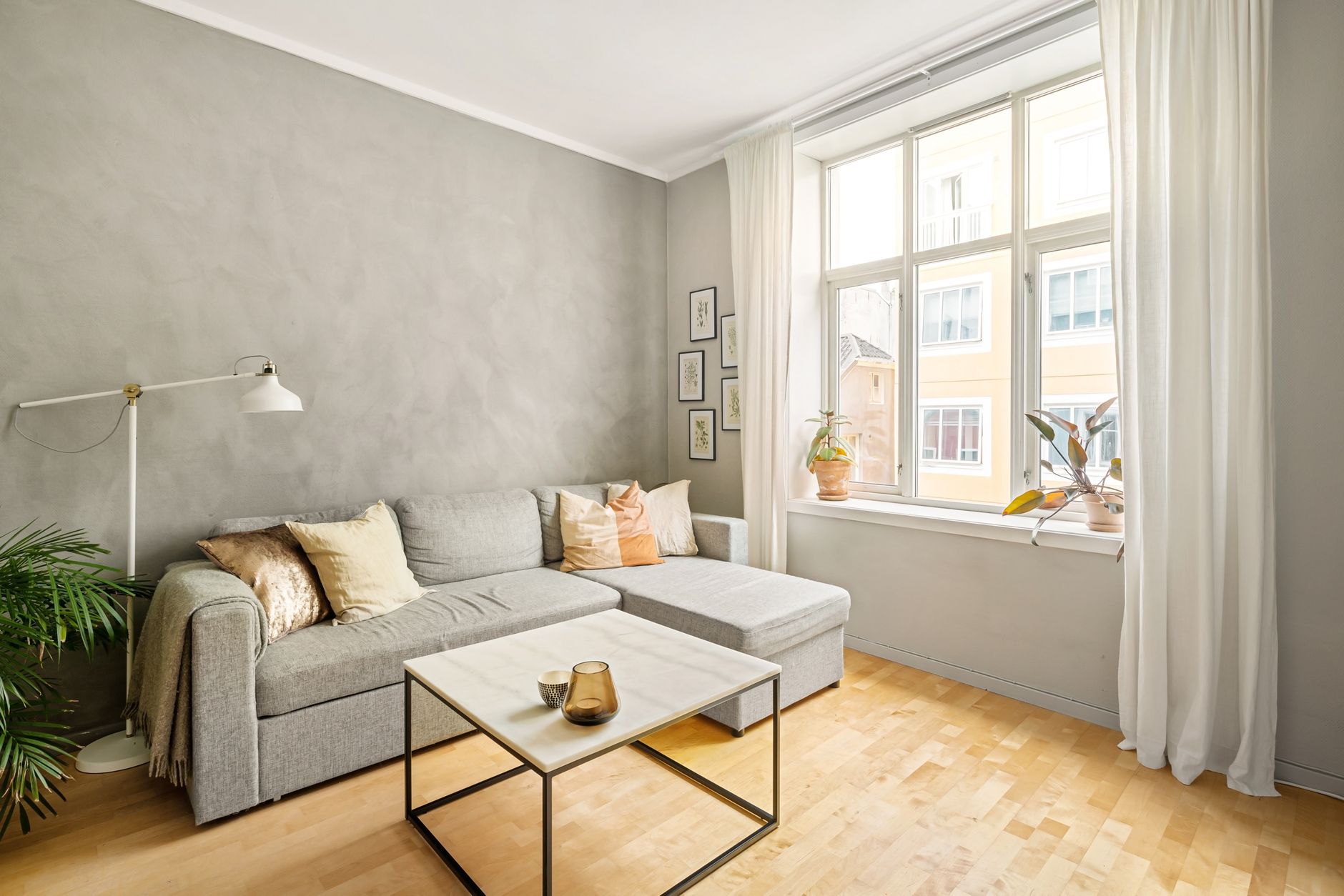
I have spent fifteen years designing interiors, and eleven of those years I was a renter myself — which means I’ve styled four apartments I wasn’t allowed to touch and got every single deposit back, in full, every time. So when I say a rental can look finished, layered, and genuinely yours without one hole in the wall, I’m not being optimistic. I’m reporting results.
This guide is the complete method. Not a list of “cute ideas” — a system, organized by the five principles that actually make a room read as designed: arrangement, light, proportion, surfaces, and styling. Each section gives you the exact rule — the centimeter, the Kelvin number, the dollar figure — because vague advice is why most rentals stay half-done.
The short answer: Renter-friendly decorating works when you stop trying to change the apartment and start controlling the five things you own outright: where furniture sits, what the light does, how sizes relate, what covers the surfaces, and what sits on top. Master those with removable tools — adhesive hooks, tension rods, peel-and-stick, plug-in lighting — and any rental reads as intentional, at any budget, with zero deposit risk.
Key takeaways
- You control five levers, and none of them need a drill: arrangement, light, proportion, surfaces, styling — in that order.
- The single highest-impact change is free: pulling furniture 5–8 cm off the walls and anchoring it on a rug.
- The magic lighting number is 2700K — three sources per room, all warm, ceiling fixture off.
- Removable ≠ flimsy. Modern adhesive hooks hold up to 7.2 kg; peel-and-stick surfaces survive 3+ years and remove clean.
- Work in the order this guide is written. Styling last. Always.
Principle 1: Arrangement — the free makeover
Before you spend a single dollar, move what you already own. Rooms read as “rental” when furniture hugs the walls like it’s waiting for permission — a floating, anchored arrangement is the fastest expensive-looking change there is, and it costs nothing.
The exact rules: pull the sofa 5–8 cm off the wall, minimum. Leave 45 cm between the sofa and coffee table — close enough to set down a cup without leaning. Keep walkways at 75 cm or wider. Every seat should touch the rug: at minimum, front legs on, which means a 160 × 230 cm rug for most living rooms, not the 120 × 170 cm one that floats like a bath mat.
Angle one chair 30 degrees toward the sofa instead of squaring everything to the TV, and the room instantly reads as “conversation” instead of “waiting room.” If your place currently feels chaotic and you don’t know where to begin, start with my one-room reset method — it’s the exact first-weekend sequence I give every new renter.
Principle 2: Light — the 2700K rule
Nothing betrays a rental faster than one cool-white ceiling fixture doing all the work. Landlord lighting is flat, shadowless, and slightly blue — and it makes even good furniture look like a waiting area. The fix requires zero wiring and about $60–90 total.
The standard: every bulb in the room at 2700K (check the box — it’s printed on every bulb sold), and three light sources per room at three heights: one floor lamp, one table lamp, one small accent light (a $15 plug-in picture light or a cordless rechargeable lamp on a shelf). Then leave the ceiling fixture off after 6 p.m. That’s the entire rule, and it does more per dollar than any purchase in this guide.
For bulb brightness, aim for 800 lumens per main lamp and 400 or less for accents. Warm, layered, low — that’s the whole formula. I go deeper on why light is the core of the expensive-room effect in how to make a rental look expensive.
Principle 3: Proportion — the math nobody tells renters
Most rentals look “off” not because things are cheap, but because they’re the wrong size for each other. Proportion is pure math, and once you know the numbers you can shop secondhand with total confidence.
The exact rules: curtains hang 10–15 cm below the ceiling line (tension rods or adhesive-hook rods make this drill-free) and kiss the floor — never stop at the window frame. That one move adds visual height to every room I’ve ever styled. Art hangs with its center at 145 cm from the floor, and above a sofa, the piece or grouping should span two-thirds of the sofa’s width. A coffee table runs two-thirds the length of the sofa and sits within 4 cm of the seat height.
Lamps: the bottom of a table-lamp shade at seated eye level, roughly 95–100 cm from the floor including the table. When everything relates by these ratios, a $40 secondhand table reads as chosen, not settled-for.
Principle 4: Surfaces — removable, not permanent
This is where renters assume they’re stuck: the beige walls, the dated backsplash, the sad countertop. Every one of them has a removable answer now, and the technology has genuinely caught up — modern peel-and-stick removes clean after years if you apply it to a smooth, degreased surface and warm it slightly (a hairdryer on low) when removing.
Here’s the deposit-safe toolkit, with real numbers:
| Problem surface | Removable fix | Typical cost | Removal |
|---|---|---|---|
| Bare/beige walls | Peel-and-stick wallpaper (one accent wall) | $35–80 per wall | Peels clean; warm with hairdryer |
| Dated backsplash | Peel-and-stick tile panels | $40–100 per kitchen | Peels clean off gloss tile |
| Ugly countertop | Removable countertop film (marble-look) | $30–60 | Lifts off; residue wipes with mineral spirits |
| Cold rental floor | Large area rug over carpet or vinyl | $90–200 (160×230 cm) | Roll it up, take it with you |
| Hanging anything | Adhesive hooks/strips, rated to 7.2 kg | $3–15 | Pull tab straight down, zero marks |
One rule before you buy: order one sample roll first and test it in an inconspicuous 10 cm square for two weeks. Five dollars of testing protects a $500 deposit.
Principle 5: Styling — the finishing layer
Styling is last on purpose. Objects can’t rescue a room with bad light and wall-hugging furniture — but on top of the first four principles, they’re what makes a space feel like yours.
The rules I give every client: style in odd numbers (threes on a coffee table, fives on a shelf), vary heights so the tallest item is roughly twice the height of the shortest, and give every surface 30% empty space — breathing room is what separates “styled” from “cluttered.” Limit the whole room to two metals and three colors beyond your neutrals, and repeat each color at least twice so it looks deliberate.
And be ruthless about what earns a spot. A styled home only stays styled if there’s a system for what comes in and what leaves — I wrote the full maintenance method in how to keep a styled home clutter-free. This is also exactly where The Zero-Clutter Protocol ($47) picks up: the decision rules for every object, so styling holds without willpower.
The one-weekend order of operations
Here’s the sequence, condensed. Do it in this order — skipping ahead to styling is why rentals stall at 80% done.
- Empty and edit (2 hours). Remove everything movable from the room. Only return what you’d buy again today.
- Arrange (1 hour). Sofa 5–8 cm off the wall, 45 cm to the coffee table, one angled chair, rug under front legs.
- Relight (1 hour + one shopping trip). Three sources, all 2700K, ceiling fixture retired after dark.
- Fix proportions (2 hours). Curtains 10–15 cm below the ceiling and floor-length; art centered at 145 cm using adhesive strips.
- Apply one removable surface (3–4 hours). One accent wall or the backsplash — one, not three. Test a sample first.
- Style last (1 hour). Odd numbers, varied heights, 30% empty space, two metals maximum.
Total: one honest weekend and roughly $150–350 depending on how much lighting and textile work your room needs.
Budget benchmarks: what each level buys
You don’t need the full budget to start — the method works at every tier because the highest-impact steps are the cheapest ones.
| Budget | What it covers | Expected result |
|---|---|---|
| $0 | Arrangement + proportion fixes with what you own | Room reads intentional; 40% of the effect |
| $100 | + Three 2700K bulbs, one lamp, adhesive hooks, curtain fix | Warm, layered light; 70% of the effect |
| $250 | + Proper-size rug or one peel-and-stick accent wall | Anchored, finished-looking main room |
| $500 | + Second surface fix, curtains for two rooms, styling objects | Whole-apartment consistency, magazine-ready |
If you want the room-by-room version of this with shopping lists and the exact sequences per space, that’s what I built The Magazine Home System ($27) to be — the full method, room by room, in the order that works.
Start here: the free first-room reset
If this guide feels like a lot, don’t start with the whole apartment. Start with one room, this weekend, using the free worksheet version of my method:
Free download: The Renter’s First-Room Reset — the one-page, step-by-step reset I use with every new renter: the edit checklist, the arrangement measurements, and the 2700K shopping list, in the exact order to do them. Get it free here.
When you’re ready to go further: The Magazine Home System — $27 gives you every room’s formula, The Zero-Clutter Protocol — $47 keeps it that way, and The DIY Library — $97 is 100 weekend projects for when you catch the making-things bug.
FAQ
Can I really hang heavy things without drilling?
Yes, within honest limits. Quality adhesive strips hold up to 7.2 kg per set on smooth, clean, painted walls — that covers most framed art, mirrors under 60 cm, and floating shelf kits designed for adhesives. Clean the wall with isopropyl alcohol first, press each strip for 30 seconds, and wait one hour before hanging. For anything heavier, lean it: floor mirrors and leaning shelf ladders need no wall contact at all.
Will peel-and-stick wallpaper damage the paint when I remove it?
On properly cured paint (older than 4 weeks) applied to a smooth wall, no — it peels clean, especially if you warm it with a hairdryer on low and pull slowly at a 45-degree angle. The risk cases are fresh paint, matte builder-grade paint that was applied thin, and textured walls. That’s why the two-week sample test on a hidden 10 cm square is non-negotiable.
What’s the single highest-impact change if I can only do one thing?
Lighting. Swap every bulb to 2700K, add one $25 floor lamp, and stop using the ceiling fixture at night. It costs under $50, takes an afternoon, and changes how every single object in the room looks. Arrangement is a close second — and that one is free.
Is renter-friendly decorating worth it if I’m moving in a year?
Almost everything in this method moves with you: lamps, rugs, curtains, art, styling objects, even most peel-and-stick comes off and the rods and hooks re-deploy. You’re not decorating the apartment — you’re building a kit of well-chosen things that will make the next place feel like home in a weekend. That’s the real return.
How do I decorate without losing my deposit on painted walls?
Follow three rules: adhesive products only on smooth, cured paint; test every sticky product in a hidden spot for two weeks; and photograph every wall on move-in day so you have a “before” record. In eleven years of renting and four apartments, that discipline returned 100% of my deposits — including one apartment with three peel-and-stick walls.